by Debra | Jan 11, 2016
Empathy is the capacity to understand or feel what another person is experiencing, i.e., the capacity to place oneself in another’s position.
Is empathy something that some people are born with and some aren’t? Is it a learned trait? Can we teach our children how to have empathy?
There is a significant amount of research indicating that the prefrontal cortex is the last part of the brain to develop and doesn’t become fully formed until a person is in their mid-twenties. These studies say that due to an immature prefrontal cortex, teenagers tend to make irrational decisions and have a poor sense of empathy. I agree that teens seem to feel more invincible and have a lower fear factor than adults. But I do not agree that brain development or the lack thereof is the only factor involved.
In my mentoring practice with teens, I see a number of teens that naturally care about others, including their parents. And then I see the other side of the spectrum where some teens care only about themselves. I have seen situations where parents give their children everything and those children act entitled. However, I have also seen the opposite, where the teens in similar situations are quite grateful. I know adults that have zero empathy and I’m pretty sure their prefrontal cortex is completely developed.
Either way, I believe as parents and elders, we can influence our youth to have empathy for others. We do this by talking with them about situations that come up in real life, such as at school or in the news. We ask questions like, “What would it feel like if you had a learning disability and the kids at school were making fun of you and you were eating lunch alone everyday?” Ask them to really think about it. Walk them through their day as if those actions were happening to them. It’s hard to feel empathetic when you have never been in the shoes of someone in that situation.
You can also use the news to help them look outside their safe little insulated bubble. Ask them questions about things that are happening in the world, and not just what is happening, but how the people feel in those situations. Then try and bring them to a place of gratitude.
So, why is it tougher for teens to really feel how others feel? Let’s take a look at a few reasons this may be so.
- Teens often do not think about the consequences of their own actions, let alone the consequences of someone else’s actions.
- Teens are “me-centric”. We have trained them to be this way because our world usually revolves around them from the moment they are born.
- Teens are often driven by their emotions and are caught up in how they feel in the moment. These types of impulsive emotions are not easily transfered onto someone else.
- Teens do not stop and reflect. They quickly move on to their next thing. This is why they seem to repeat the same mistakes over and over. It just doesn’t occur to them to do anything else.
- Most teens do not know how they feel or how to express their feelings, so they may not be able to feel how others are feeling either.
- Teens often haven’t developed the maturity level to consider others, nor have some adults. .
This does not reflect all teens, and, quite frankly, this behavior does not necessarily change when they become adults. So, I personally think we could be talking about people in general. Pausing and thinking about how our actions might affect others or how others may be feeling would be a good place to start to understand and learn about empathy. And being able to empathize is one of the best ways to learn how to be grateful.
“The great gift of human beings is that we have the power of empathy, we can all sense a mysterious connection to each other”
-Meryl Streep

by Debra | Jan 4, 2016
I often talk to parents who have put their relationship with each other on the back burner to care for their kids. I wonder if this is doing more damage than good. It’s tough enough to raise kids that aren’t “me-centric” without making them the top priority in our life. I see this often when I am mentoring families. The parent’s lives revolve around the kids 100%. When I ask if they ever do any adult activities alone or with friends, they usually say they do not. So who comes first in your marriage?
It isn’t a healthy set up in a primary relationship to not have alone time with each other.
When I tell parents to go out once a week and that they are not allowed to talk about their kids, they find themselves at a loss for words. They admit that it is impossible to have an evening out like they use to before having children.
This is one of the reasons it is so important to always maintain your relationship with each other first, then take your relationship together to the kids. If you lose your relationship together, it isn’t as easy or fun to parent your kids. It also isn’t good for the kids to have all of your attention on them. They are also learning to have a healthy relationship by watching you and your relationships. If you aren’t giving each other the attention needed to nurture the relationship, your children might learn to do the same in their relationships.
Relationships are tough when given the attention needed. When you lose touch with each other, the relationship becomes even more disconnected. When it is disconnected and a problem arises, it is harder to come to resolution because of the separation. When you are connected to each other and something comes up, it will be easier to talk about the issue and move through it.
When I have couples come in for a retreat, most of them have children and are looking for a way to get back to each other. I find that if they can connect with themselves first, then take that into their primary relationship, they will become better parents.

by Debra | Dec 28, 2015
Do you and your partner communicate?
Does your partner listen to you?
Do you feel like you and your partner are drifting further and further apart?
Do you long for a closer, more connected relationship?
Relationships are not easy. They bring up our childhood wounding and actually make us behave more like a child. If communication, hearing each other, and getting closer are important to you in a relationship, then you need to learn how to live in your higher self and stop acting out of your inner child. You can learn how to do this through a couples’ retreat.
Both partners have to be wiling to step up and participate at a huge level. They both have to learn how to look at their own woundedness and reaction through that place and stop projecting onto their partner.
A client was talking to me about how triggered she gets when her partner continues to leave trash next to the trash bin instead of inside and then forgets to take the trash out completely. She has asked him over and over and for whatever reason, he isn’t hearing her and continues his behavior. I have suggested that instead of telling him what to do, that she do her own trigger work around his behavior and work on shifting her old beliefs instead of shifting his behavior. She could let him know that it triggers her and that the belief her little girl is buying into is that she doesn’t have a voice and she’s not important and that the feelings around the trigger are frustration and anger, but mostly sadness. The action her little girl wants to take is to keep nagging to get him to listen so she won’t be so agitated about the situation. His action is just his action. It’s not about her not having a voice or not being important.
In partnership, we need to work on our own beliefs and not work on getting our partners to shift their behaviors to make us feel better. Try exploring the feelings that come up when you get triggered and try not to medicate them away. When we look to our partner to change his or her behavior, it is a form of medicating because we don’t want to feel the feelings we have. Sit with the feelings and then explore what beliefs you are having around the behavior and don’t be so quick to talk to your partner about his or her behavior. When working with couples in a retreat, they learn what triggers them and why and the tools to take action inside of themselves instead of outside.

by Debra | Dec 21, 2015
Beautiful Sedona Arizona during sunset
The holidays are upon us again and being with family can be quite challenging. How do we stay in a place of love and have a good time during the holiday season?
Is it even possible?
It is so funny how excited we get to spend time with family only to come unglued when we are together because they do such annoying things. So, our families are going to trigger us, they’re our family! If we can just realize that their behavior has nothing to do with us.
If you get triggered just know that it is for your learning. If we don’t take our families behavior personally we take stay in a place of love instead of fear and really enjoy our holidays.
I usually go to Ashland to see both of my girls and grandson and we all get to explore our triggers with each other. If we can all own our own triggers and not project them onto each other, we can have a great time together.
This has been such an amazing year of growth for me. I have had so many changes and so many shifts. I am very grateful for all the people in my life who have triggered me and given me the opportunity to look at myself authentically. I am also so grateful for all of my clients ranging from ages of 13 to 68 years old. You all have been an incredible gift to me. Just being in the presence of your growth has been such an honor.
I look forward to another year of shifts and growth. See you in 2016!
Warmly, Debra

by Debra | Dec 14, 2015
Through out my life, I have always been in search of a teacher that can take me to the next level in my personal growth. It’s always comical to me when I am looking how the perfect teacher comes to me. When I am talking to someone about mentoring or a personal retreat, they just know and we start the process. I often hear from clients that when they read through my website, SedonaSoulRetrieval.com, that my words just resonated with them and they called.
In all the spiritual guidance books I have read, they seem to say the same things about needing a teacher to uncover your blind spots. We all have blind spots and we can’t see them, hence blind spots. I’ve always enjoyed my relationship with my teachers because if I am with them long enough, they get to know me as I am seeing myself and can help me with those shadow sides that I am either not willing to see or just simply don’t see. If your relationship is a conscious one, most of the time you are willing to look at what your teacher can see. This may not always be fun or easy, but the rewards of seeing yourself clearer are always enlightening and put you in a better place.
The process that I designed and use gives my clients the opportunity to really see themselves, understand themselves, and make the shifts in their lives that are necessary for their growth as spiritual beings in this physical world.
The process is using life experiences as a tool to see if you are operating from a lower or higher consciousness. We want to be operating from our higher selves, obviously more than our lower selves. But what if we don’t even know the difference? This is where the problem lies. To get to a higher way of living, we first need to know what our lower self is saying and what action our lower self is taking. Then, and only then, can we shift into a higher way of living.
By shifting into living in our higher selves, we can go into the world with a higher vibration and participate with others from our heart, not our fears. We can show up for family, friends, the world and ourselves from a place of love, kindness and compassion.
The first place to start has to be ourselves and then we can take ourselves into the world from an empowered position and help change the world.
“I walked into this retreat feeling overwhelmingly sad, broken and alone. I am walking out empowered awake and at peace. To say that this retreat was life changing would be a huge understatement. This work is incredible and creates huge shifts. I’ve done self-improvement work for over a decade, but nothing ever really changed for me.
This work with Debra made it clear why nothing had ever worked before. She is an incredibly warm, sincere and loving person who creates a beautifully safe place to work in. I don’t want to leave! All I can say is you deserve this retreat. Love yourself enough to give yourself this gift. I will be forever grateful that I get it.” Melissa Sanford

by Debra | Dec 7, 2015
If you were never taught that you had rights as a child, there is a good possibility that saying “No” isn’t in your vocabulary. Because I was abused as a child, lived with a binging alcoholic and a mother that never said no, I couldn’t say it as an adult, especially with men.
The words simply wouldn’t or couldn’t come out of my mouth. If a man was an authority figure or I dated a boyfriend with a strong personality, I wouldn’t speak my truth or ever set a boundary. If I did happen to get the “No” word out, I would immediately think I did something wrong and feel insurmountable guilt.
It has taken many years of processing through my childhood wounding to even realize that I wasn’t speaking my truth, and to shift my old beliefs to get to a point where I can say “No, thank you,” and not have a knot in my stomach or beat myself up.
If you can’t say no, you can’t set healthy boundaries.
If you can’t set boundaries, you will be resentful and be a victim. The first step is realizing it is your lower self that stops you from setting boundaries and saying no. If you were in your higher self, it would know that you have rights and that setting boundaries is for everyone’s higher good.
In my personal retreats, this is one of the basic things you will learn. We will look at your past wounding and explore your old beliefs from those wounds and create new beliefs and behaviors to start living a more empowered life. It’s impossible to be empowered if you are a victim, not setting boundaries, and blaming others for not doing what they should do.
Call me and let’s explore how a personal retreat will help you become more empowered.
Testimonial From a 2-Day Retreat
“I walked into this retreat feeling overwhelmingly sad, broken and alone. I am walking out empowered awake and at peace. To say that this retreat was life changing would be a huge understatement. This work is incredible and creates huge shifts. I’ve done self-improvement work for over a decade, but nothing ever really changed for me.
This work with Debra made it clear why nothing had ever worked before. She is an incredibly warm, sincere and loving person who creates a beautifully safe place to work in. I don’t want to leave! All I can say is you deserve this retreat. Love yourself enough to give yourself this gift. I will be forever grateful that I get it.”
-Melissa Sanford

by Debra | Nov 30, 2015
Through a personal retreat you can learn how to allow your kids to have feelings and not let it upset you as well.
How often do we really allow ourselves and our children to feel what we are feeling? A client of mine was expressing how nervous she gets when her 7-year-old son tells her he is worried. When she asks him what he is worried about, he says he doesn’t know. Then she really gets worried and tries to fix the situation by telling him there is nothing for him to be worried about. She tries to distract him from his worry with ice cream, TV, or calling a friend over to play. Does telling her son not to worry make him not worry? Well, it didn’t stop him from worrying. The anxiety kept building.
My suggestion was to tell him that it was okay to be worried and that everyone feels worried at one time or another, including her. I also suggested that she ask him what it felt like in his body. Was it a contraction or perhaps a nervous stomach? What was the sensation he was feeling? He described the feeling as shaky and sick. Then I asked her to just let him be with the shaky and sick feeling and to ask him if he was okay being with those feelings.
At first, he said he just didn’t want to feel those feelings and he wanted it to stop. But after a while of feeling it, he said it went away. Every time he got those feelings, he would do this, and the bad feelings would go away. He had learned that the feelings and sensations weren’t going to hurt him.
This exercise teaches our children how to be with their feelings. If we start medicating their feelings when they are young and they can’t be with the feelings, then how will they ever learn? Feelings are normal. Worry, anxiety, fear, sadness and anger are all normal feelings. If we are always trying not to feel them, they don’t go away.
Pretending not to have them actually makes them stay longer.
Teach your children how to be with their feelings and let them know they are a normal part of life. Life is up and down. If we can only be with the up parts, the good, then we won’t be able to sustain our joy in life.
How hard is it for you as a parent to allow your kids, no matter what age they are to suffer a bit and be with their feelings? Most parents say it’s almost impossible!
In a personal retreat, you will learn the importance of being with your feelings and letting others be with theirs.

by Debra | Nov 23, 2015
Teens are selfish by nature. Their brains haven’t yet fully developed, which means that it will take them time to grow into the caring individuals they have the potential to become. We can help them become the best possible versions of themselves by teaching proper values from a young age. One of those values is realizing the importance of gratitude. What better time of year to do that than the Thanksgiving holiday?
1. Start Young
If you start teaching your children about gratitude and kindness when they are young, it will stay with them. However, that doesn’t mean it’s too late to get started now. If your kids are already teens, you can still help them learn these values by creating new Thanksgiving traditions to enjoy together. If you’ve never gone around the table to say what you’re thankful for prior to enjoying the holiday dinner, why not start this year? Your kids will probably roll their eyes and get annoyed, but deep down, they will enjoy recognizing all of the wonderful things in their world.
2. Try Not to Compare
Growing up, your parents probably told you that it was important to appreciate and finish your dinner because there were children starving in other countries. While this is true, it just doesn’t make an impact on most kids, especially teenagers. If it does make an impact, it will probably make your teens feel guilty about what they have. You want to cultivate gratitude, and your teen can’t do that if he or she is thinking about how everyone else is suffering. Instead, try talking to your kids about how people can feel grateful no matter what their circumstances. Kids in poor countries might not have all the latest toys and gadgets, but they still feel grateful over the things they do have. It’s all relative, and appreciation is always a good thing.
3. Be a Good Influence
Thanksgiving is a very special holiday, but it won’t do anyone any good to be thankful one day a year. You are your teen’s greatest role model, and if you practice an attitude of gratitude all year long, it will have a strong effect on your teen, even if it doesn’t seem like it.
It’s good to point out the things you’re grateful for, such as having food in the fridge or a nice home, but if you really want to get your teen’s attention, try thanking him or her every time they do something to make you proud. Even showing appreciation for the little things, such as cleaning the bathroom, can do a lot to make teens feel good about themselves.

by Debra | Nov 16, 2015
It’s amazing what we will do to not acknowledge, avoid, or get away from our feelings. Why is this? The answer is because we dislike how they feel. We only want to feel good things and when something comes up in our minds and bodies that feels uneasy, anxious, terrifying, sad, hopeless, etc., we push it away.
Is it possible only to feel good all the time? Not in the world we live in, and not in the bodies we preside in. Life is full of ups and downs. We will have happy moments and sad moments and maybe even tragedies. If we cannot adjust to all of life’s moments, we will be unhappy, sad, fearful, or hopeless.
Have you ever tried to just sit and be with your feelings and, deeper yet, the sensations of your feelings? I have and it’s shocking how they feel in my body. I want to welcome in all the feeling and sensations going on in me, not just the pleasant ones. The growth is in the unpleasant ones, so if I want to evolve and grow, I need to pay close attention to the disturbing sensations in me.
The other day, I was feeling very anxious and after I tracked the feelings and where they were coming from, I sat down and explored the sensations going on in my body. What I found was total terror. The sensations were tightness in my chest, nausea and shortness of breath. I kept the story about why I started feeling this out of the picture. I only sat with the sensations, and within a very short period of time, the sensations were completely gone. In Buddhism there is a belief that when these feelings come up, we are exhausting them not only for ourselves, but for other sentient beings as well.
I was able to feel the feelings and drop the story.
I’m not sure that it is realistic to believe that in this lifetime we can rid ourselves of all unpleasant sensations. If we cannot, then I choose to allow them in with love and compassion and feel them without judgment or resistance. This process allows for such spiritual renewal and teaches us how to be with our feelings just as we are, with all of the pleasant and unpleasant feelings life has to offer. It also helps us see things through our higher self, knowing that all feelings and sensations are for our higher learning.

by Debra | Nov 9, 2015
First, let’s talk about what a projection is. I was talking to a client this morning, and she was telling me that a friend, Katie of her daughter was concerned about the way her daughter was eating. A little background info is that her daughter watches what she eats carefully and has been diagnosed with a disorder concerning eating but not a full blown eating disorder. My client and her daughter are on top of this. The daughter sees a nutritionist, a mentor, and a doctor.
A group of the youths went out after a game for donuts at 11:00 PM and my client’s daughter said she would go but wouldn’t be eating a donut because it would make her feel crummy for tomorrow’s game. Katie said she and Katie’s mother were very worried about my client’s daughter’s eating habits and that my client’s daughter needed to see a therapist, and Katie wasn’t going to be able to hang out with my client’s daughter anymore.
Projection or Not?
It is a total projection. If Katie and her mother are having fears regarding my client’s daughter’s eating habits, it’s their trigger. They should go see a therapist and figure out why they are having so much fear concerning someone else’s behavior. Remember in my blog: Do Your Feelings Come from Inside or Outside of You?, where I talked about lower and higher consciousness?
Lower consciousness is where we feel the need to change other people’s behavior to make our self feel better, and higher consciousness is where we know our feelings come from inside of our self. So, in this situation, Katie and her mother would have to change a lot of people’s behavior in the world so that they wouldn’t feel afraid.
That’s impossible. We couldn’t change other people no matter how much we wanted to. We can only change how we react to the fear inside of us. It would be a good thing if Katie and her mother could look at where their fears are coming from and stop projecting them onto my client’s daughter.

by Debra | Nov 2, 2015
“Life is available only in the present moment.”
-Thich Nhat Hanh
I love these quotes because I know that true joy and aliveness come from being present in the only moment we truly ever have, this Moment!
We are so trained to live in the past and the future. Look at our careers. We look at how we can get ahead, move up the ladder so we can earn enough money to buy the things we want, go on special trips, buy a better car, etc., in the future. We are always looking into the future. If we are single, we are looking at finding someone. If we are married, we are looking to make our relationship better. We are always planning for something in the future.
The past gets us as well. We look at what we have done, and maybe we have regrets about what we have done. We might also look at the past and have a yearning for what we have lost. We also spend time with our memories. We live in a world of high stimulation where we have become quite multitask oriented.
How often are we truly right here in the present moment? It isn’t easy to be in this life as it is unfolding. Our minds are capable of looking back and projecting forward, so it makes for being right here tough.
Let’s look at a few simple ways we can stay in the present moment.
- Slow down-relax and be calm about your daily practice, whether it be eating breakfast, going to work, working out, or cooking your dinner. Do things with intention and ease.
- Start your day with a meditation practice-this helps to bring an awareness to my day and helps me be more conscious throughout. Set an intention to slow down and be in the moment.
- Name what you are doing-I am eating breakfast now, chewing my toast, walking to my bedroom, calling a client. It is a gentle reminder of where I am.
- Do one thing at a time-it has been proven that doing more than one task at a time isn’t effective, and it’s impossible to stay in the present moment when there are two present moments.
- Set daily reminders to be present-I have three reminders/alarms throughout the day that remind me to stop, breath, pause, and bring myself back into the present moment. This is such a wake up call to myself.
Practice these on a daily basis and see if it helps you to be more present in your daily life. In my personal retreat, we work on different ways of making it easy to be present and enjoy your life just as it is.

by Debra | Oct 26, 2015
Can we ask our partner to meet our needs?
What expectations do we have for our partner to make us happy?
Of course, we want to be in a partnership where we can relay our needs, desires and requests and have them heard and understood. But, what if our expectations aren’t met? Is it our partner’s job to meet our needs and be responsible for our happiness?
The answer is NO! It’s nobody’s job to make us happy but ours!
This doesn’t mean that we can’t share what we would desire from our relationship in a healthy way and hope to be heard. What does this look like? When we are wanting our partner to show up for us in a certain way to make us feel better, this is where things get sticky. This is a projection of our wounding being put onto someone else. It isn’t anyone’s responsibility to heal our wounds from our childhood but ours. When we project, there will always be resistance from the party we are projecting onto. This is how we always know if we aren’t owing our own wounding and expecting someone else to come in and save the day from our own pain and suffering.
NOT THEIR JOB!
If our partner gets defensive, there is one of two reasons. One is, we are projecting and needing them to behave in a certain way to make us feel better, or two, we are owning our own issues and they don’t want to own theirs, and therefore they project. It is very tricky to know the difference, although if you are both doing this work, you will both know when you are owning and when you are projecting. Let’s look at this more closely.
Owning your own wounding: “When you did this, it triggered my little girl and she is buying into this old belief and has these feelings. It’s not about you changing your behavior. It’s about me shifting my old beliefs around the behavior.”
Projecting: “When you did this, it really made me angry, and I need you to stop doing that. If you would just stop behaving like that, I would feel better.”
Do you see the difference? The first one shifts old beliefs and heals your wounding. The second expands your old beliefs and doesn’t allow for any healing to be done. If you want to heal the wound and shift the belief you have to own your trigger.
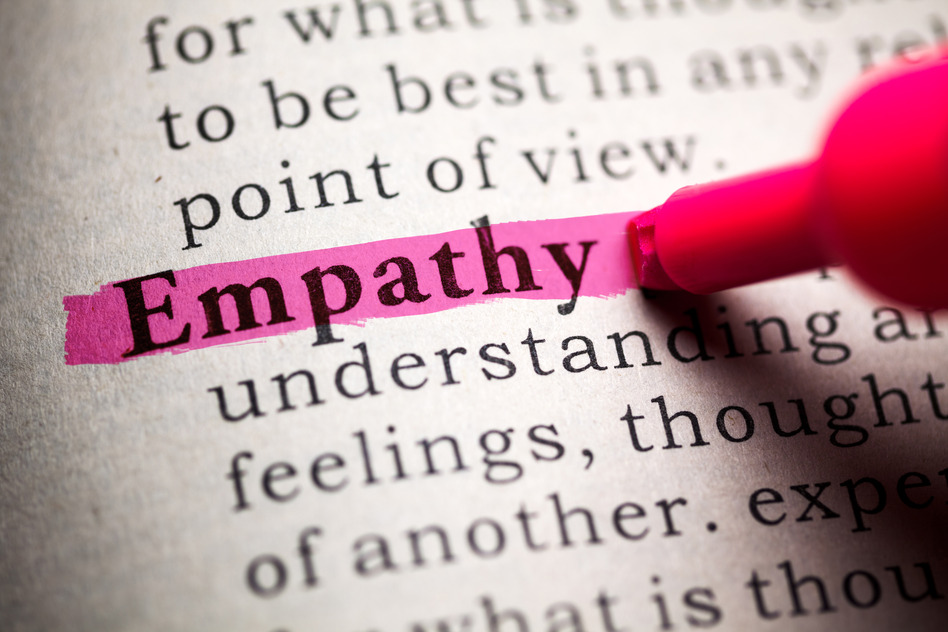 Is empathy something that some people are born with and some aren’t? Is it a learned trait? Can we teach our children how to have empathy?